How a simple content audit turned into a $110K deal within 60 days
Jacob Warwick is the current CEO of Predetermined, formerly known as Execs And The City, former CEO of Discover Podium, and has made a career as THE executive negotiation coach for Fortune 500 executives. Jacob has secured more than $1B+ in financial lift for his clients (yes, that's billion, with a b … no typo here). And he had reached an audience of more than 24,000 followers on LinkedIn by the time I met him. So why on earth, and how on earth did I end up running his account? Well, that's what I'm about to tell ya :)
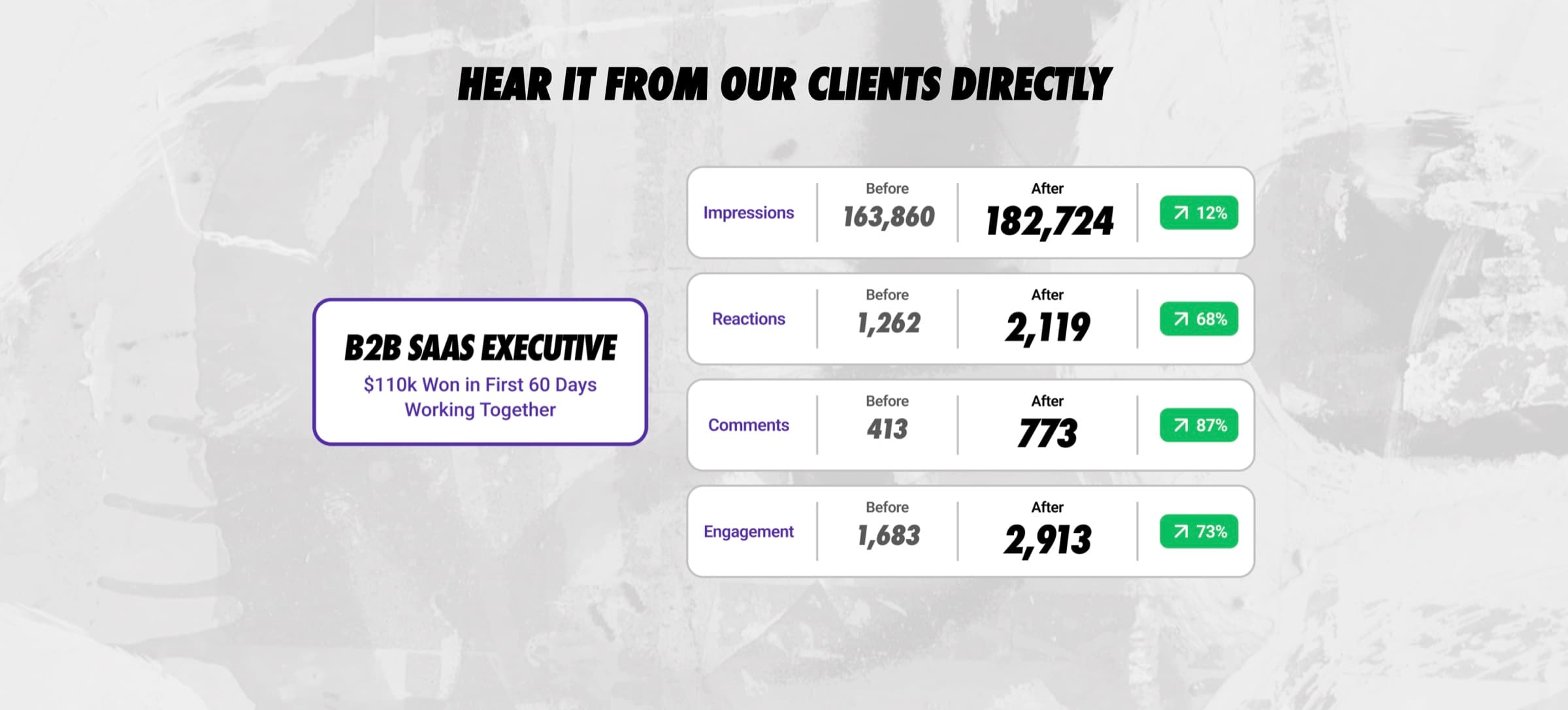
To understand how we got to a LinkedIn post to source a client that would net him over $110,000 through a closed deal for his services, we have to address why he would trust someone with his brand in the first place. Jacob, like many other executives online, gets a major portion of his clientele through referrals. If you're an enterprise executive, have been in the C-Suite for quite some time, or have had the privilege of running your own business … you understand the weight of a good referral.
Someone on LinkedIn referred to a piece of content from our team at AMP Creative (now AMP Social), and it piqued his interest enough to schedule a content shoot with us. After some brief communication, and one hell of a script for his first ever course he had created, we were all headed to Atlanta to film a major course for executive negotiation tactics and compensation frameworks (yes, it was as complex as it sounds).
The interesting part about Jacob though, is that he coaches these executives who are at the highest levels in their industry on how to get the best compensation structure for their roles. We're talking life-changing financial plans.
So it wouldn't be too far-fetched for me to tell you that 3hrs into our shoot, we still weren't past the 1st module. This was a bit of an issue, considering there were 10 total modules, and we only had the studio until 8:00pm that evening. So, like something any good production team would do, we sort of blew up the script that Jacob spent hundreds of hours and thousands of dollars getting pieced together (sorry Jacob, but it had to be done).
Because we were honest with his approach, and leveled with him that speaking to a teleprompter line by line would not get him the end-result he would have hoped for, we were able to flip the script on its head, and begin asking him questions exactly like those his clients would. From behind the camera we were able to take the most critical components of his trademark course, all his frameworks, and the best possible tactics he knew about negotiation compensation and communicate that in an effective way over the course of 10 modules.
To this day, I don't understand how he was able to pivot so well, but that just goes to show that you either have expertise … or you don't. Once we removed the guardrails (and ditched the teleprompter) … it's like we transported ourselves into the boardroom of a high-stakes negotiation.
I believe that this is what earned his trust to partner with AMP Creative (where I was working as Head of Content), which soon led to us managing his LinkedIn profile and digital presence.
We're going to cut to the chase here since this was a bit of a long intro (thank you for your patience), so here's how I audited Jacob's profile, reworked his messaging, positioned him as the expert he is in negotiation, and 60 days later, brought him a client that earned him $110,000 in closed revenue.
I audited his profile and all his weekly newsletters he was sharing on LinkedIn. The content was GOLDEN. Truly a writer's dream to walk into … but there was just one problem. His content wasn't solid gold. It was more like Golden Corral levels of Golden. Your brain felt as full as your belly after a buffet the way each post was pushing the 3,000 character limit.
Jacob was running into something many executives do when sharing their expertise, and that's assuming everyone has the same level of understanding about your craft as you do. You have to remember when you post on LinkedIn, especially at certain times of the day, you're catching someone mid scroll.
The substance and expertise was there for Jacob, it really was. Even those who read through the entire post were leaving comments saying how much they enjoyed it … but the number of people reading everything was far too little.
He was burying the lead, so we had to reverse engineer his weekly post.
We had to go back to the drawing board and make sure none of his new posts were burying the lead like some of his previous ones. The hooks became stronger. The promise and payoff of each post became clearer. And most importantly, there was structure to his tactics and frameworks.
By simplifying his longer posts, his expertise became more apparent in bite-sized pieces of content. Complex negotiation tactics became believable, because a reader could walk away from one of the posts with actionable steps in less than 2 minutes of dwell time.
By making his expertise simpler to understand, we were giving his ideal reader two of the most important assets we could possibly provide: value and their time back.
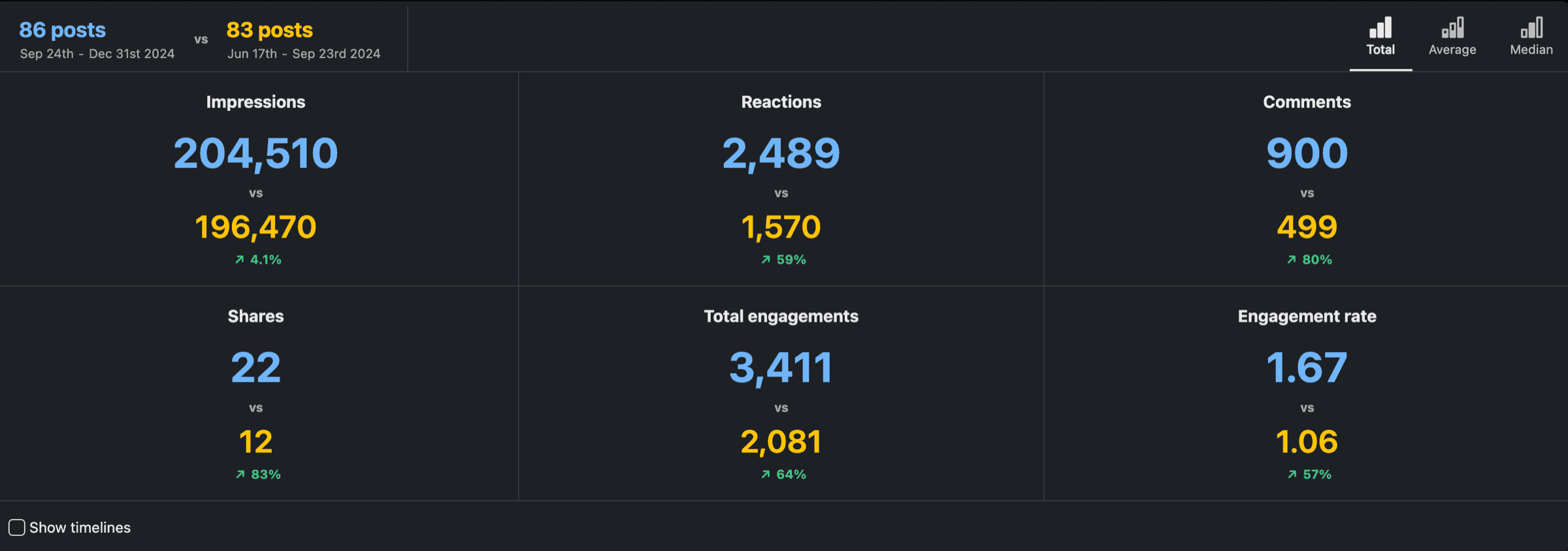
That value is what brings readers back to your profile. And you should protect your ability to do that as best as you can. You must remember when you write that it's not about what you want to share … it's about what your audience wants to read.
I get it, it's your profile … but when you only post what you want to post online, you will become frustrated because it's going to feel like you're shouting into a void after a long enough time.
Inside the first 60 days of making these changes, a LinkedIn TEXT post brought in a client who closed at $110,000 (yes, these still work believe it or not).
I wrote the post, and a message came inbound because of that post. A couple weeks later, a deal was closed.
He's not only been one of my longest clients since this time, but he also brought me in to film the first episode of his podcast, and flew me out to shoot principal footage for his first ever private event at his organization.
Deep expertise can often work against you on social media. The more you know, the more you assume, and the assumptions are what lose the reader in the first two lines. Writing simply is not writing down to anyone. It's simply meeting them where they're at on the work day (or after). If you can optimize for that, and your audience feels that you constantly provide value, you will be well on your way to a healthily sized audience. I can assure you of that.