Growing an audience on 75-100 targeted comments a week
This contract was across the span of eight months of engagement-only work during the steepest year of reach decline LinkedIn has recorded to-date. Through commenting alone, we netted over 2,600 followers and kept his LinkedIn profile in front of the accounts his agency wanted. This test also changed how I think about splitting one profile across separate vendors from a content creation, video production, engagement and outbound perspective. Hence why I now only offer a done-for-you writing service on LinkedIn.
This particular CEO was a referral that came from a current business partner of mine. He runs an account-based marketing agency that has grown 600% from year one to year three, fully bootstrapped. They have served 100+ companies and built repeatable ABM programs across a wide range of B2B organizations. And, to be frank, does not have the time to run his own LinkedIn presence … which is true of most executives I talk to.
The solution we landed on was to divide the work. Someone wrote his posts, someone made his videos, and I handled the engagement side of things. My task was commenting, 75 - 100x a week on the LinkedIn feed, aimed at the accounts his agency wanted to reach, in hopes that we would grow his following and close more deals within his ICP.
Although each of us involved were good at our own piece. None of us had an all-encompassing view of the account itself, and that turned out to matter more than I expected going into this agreement.
Some important context for this time is that this agreement ran through the steepest decline LinkedIn has had to-date. Any report you see from 2025-2026 should mention that context, because LinkedIn has implemented a 360-brew model for the algorithm, and it has drastically changed how we should all approach LinkedIn compared to the previous years.
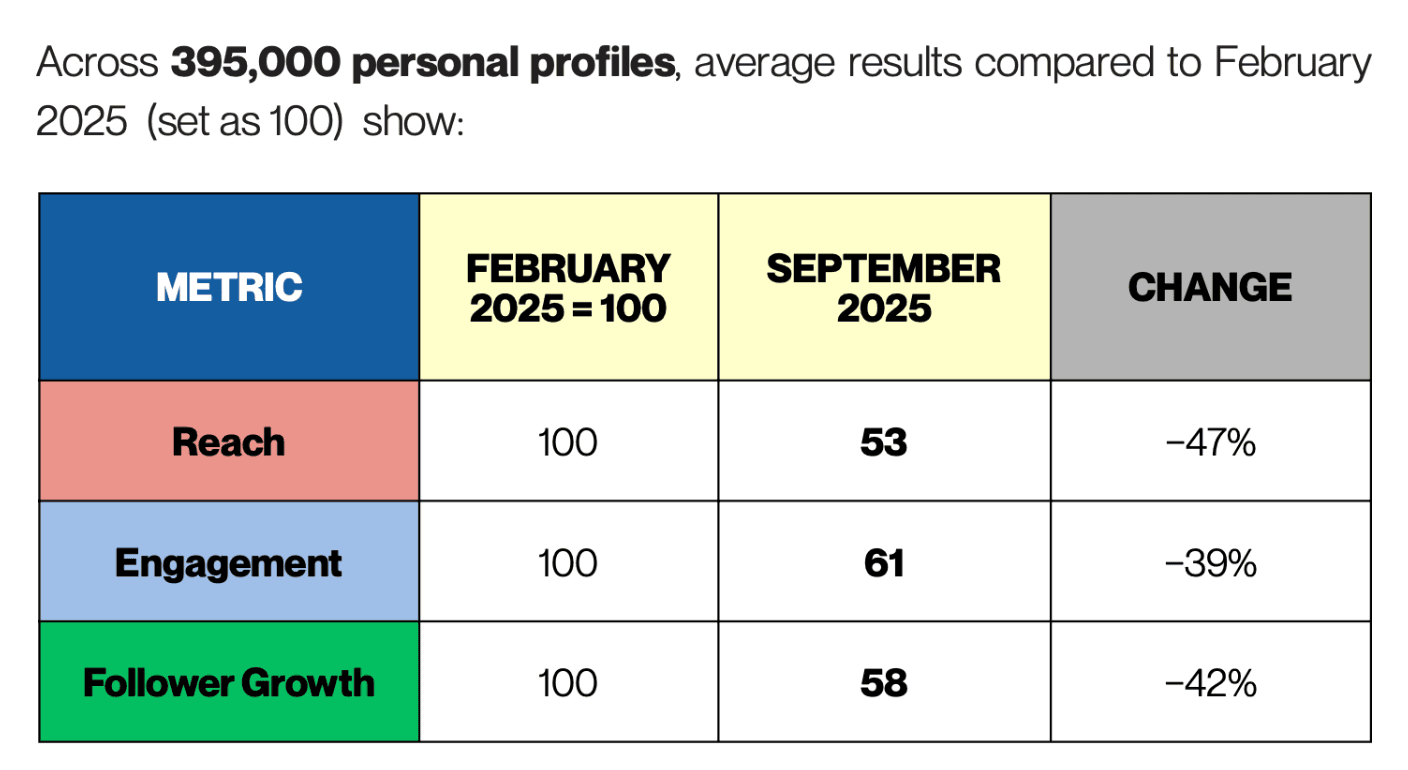
The Algorithm Insights report published by Richard van der Blom in October 2025 surveyed 395,000 personal accounts. A post that reached 10,000 impressions in February 2024 was reaching roughly 6,500 a year later, and about 3,500 by September 2025. That is a 47% drop in reach in seven months. A separate industry report by Alex Boyd (former CEO of Aware) covering 13 million posts found average engagement per post down 76%, with the median down 72%.
This particular CEO's year-over-year reach decline came in at 39%, about eight points better than the platform average. Not a number you want to take home and hang on the wall, but to beat the average profile's decline is some sort of inclination that you're making progress. But not enough for what we hoped initially.
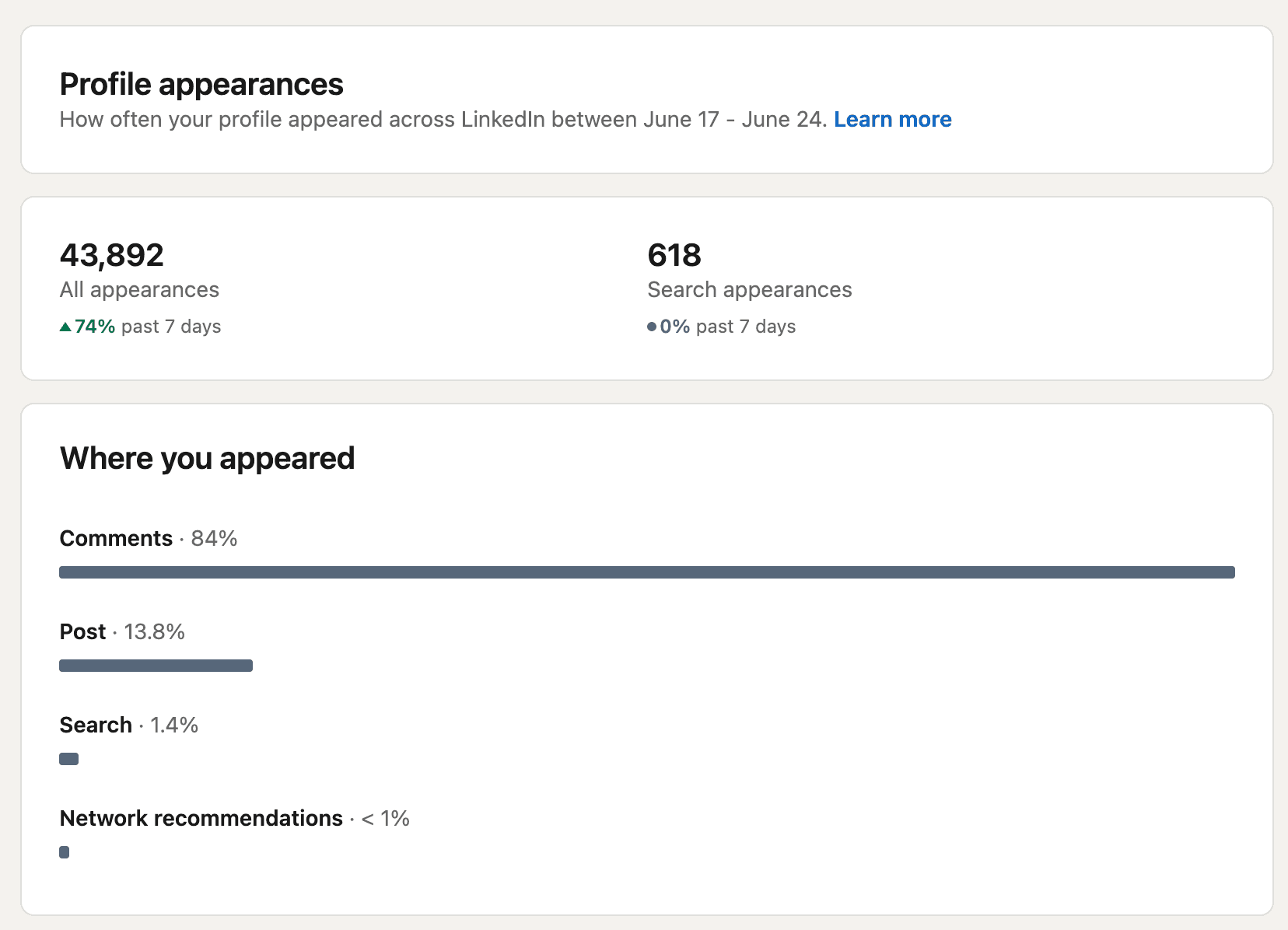
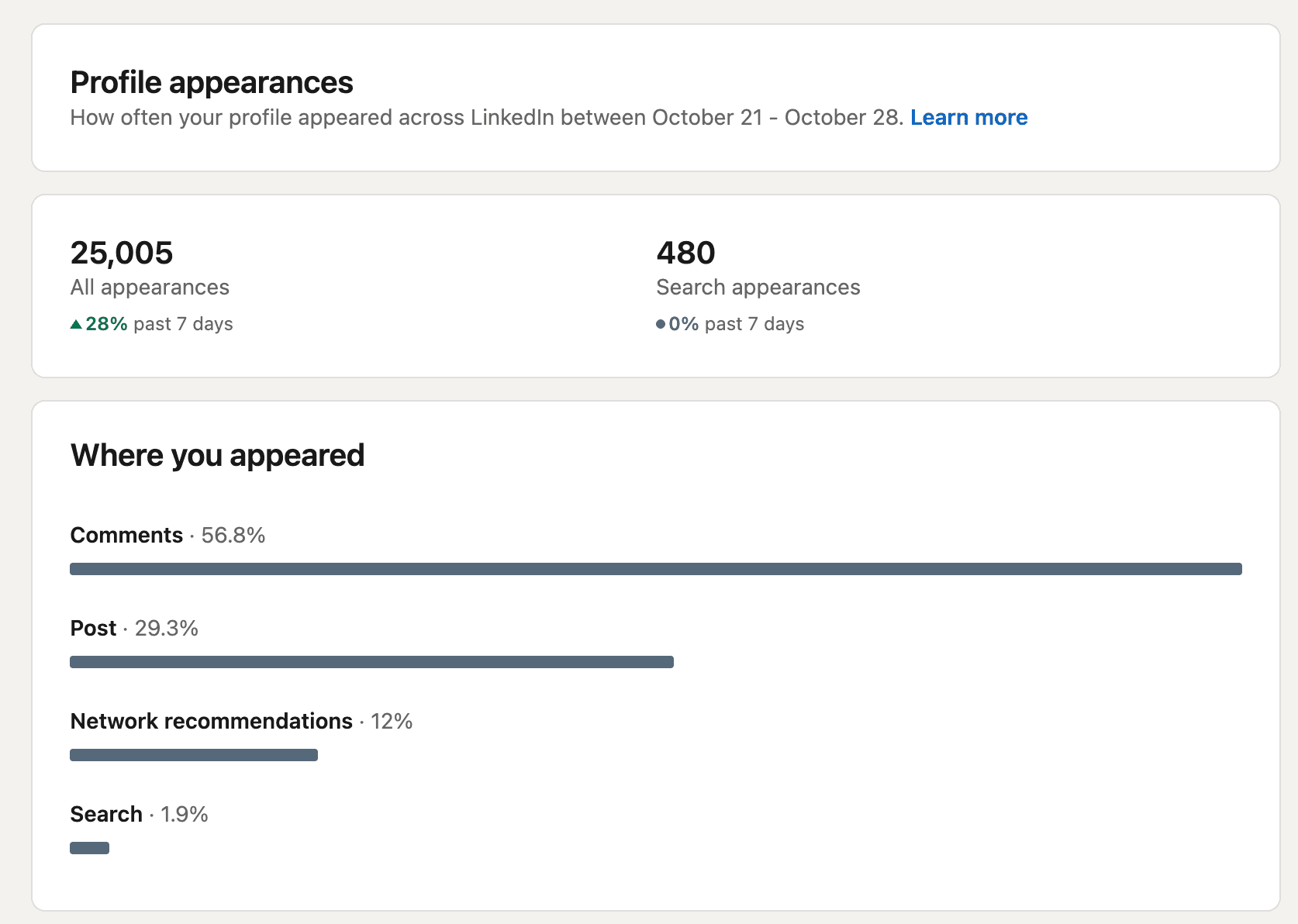
In the middle of this engagement, LinkedIn started reporting how often your profile appears across the platform, measured week over week. In June 2025 his account was showing up in the feed 84% of the time. By the end of the engagement that figure read 56%. Averaging across the period, his profile was in front of people more than 70% of the time, and that was coming from the comments rather than the posts.
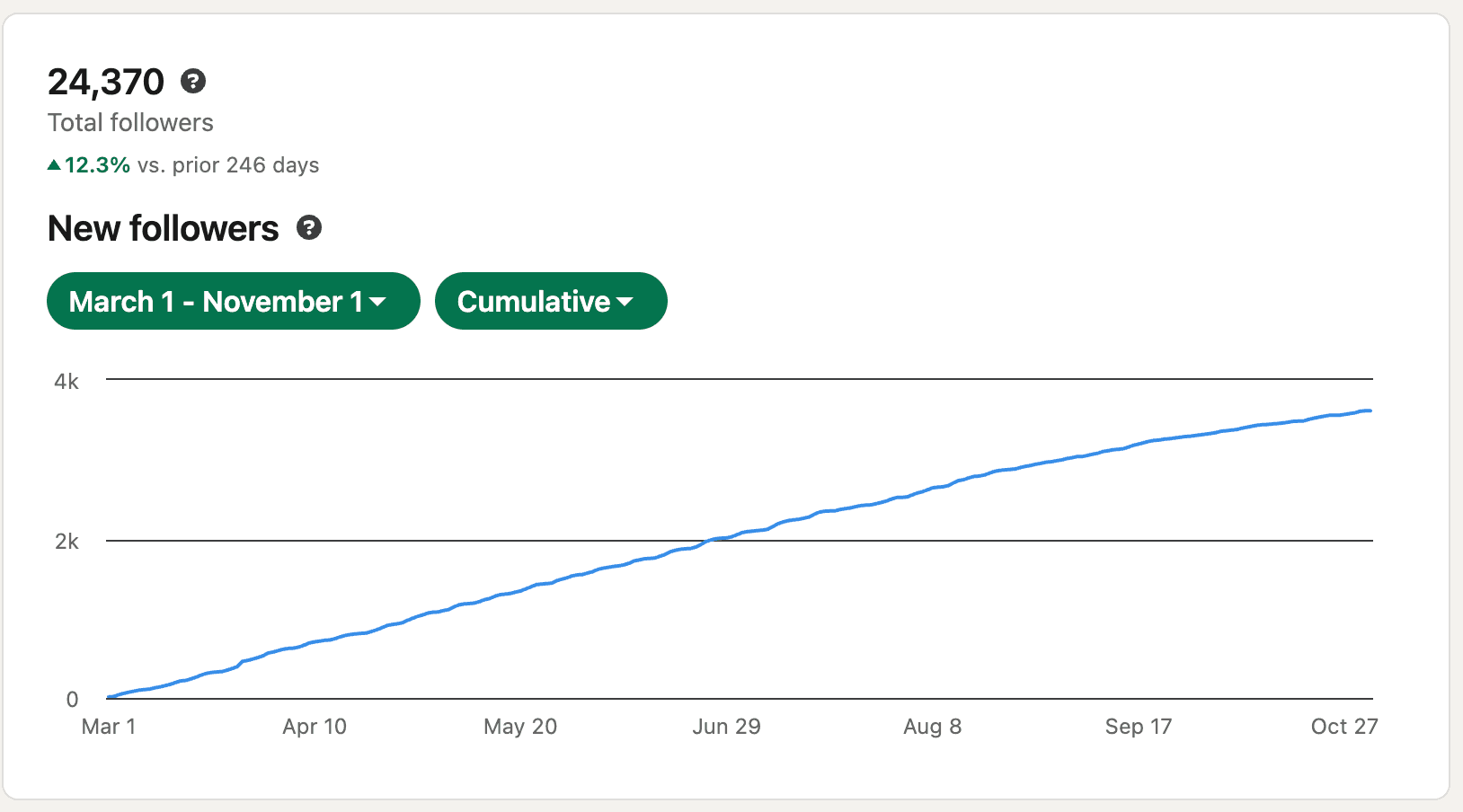
On follower growth, engagement alone produced 12.3% over roughly 250 days, finishing at 24,370 followers. Just over 2,600 new. The way I look at this, a win is a win!!
Now, if you've made it this far, you're probably wondering two things:
1) Why on earth would I include a case study that doesn't include massive wins and resulted in this client ultimately not renewing for a 3rd time.
2) Garrett, what would you do differently now that you know this information.
First thing first, I wanted to include this to showcase that I don't have the answers to all of LinkedIn's problems. It's a messy platform, with massive product updates, and no-one to truly communicate those when they get rolled out. It's frustrating. It's a common pain we all feel … but it's just the way the cookie crumbles on this platform.
I also wanted to keep it real and authentic and not sell you a story that's not true. This was my first client who was a CEO of an ABM agency. I've never written for an ABM agency before, let alone comment on their behalf in their POV. So this agreement stretched me.
The amount of marketing research I did before replying to very specific comments that I needed to have a founder's specific POV on was “ridiculous” to those that knew what I was doing. But to me, it was necessary. I began to feel like an ABM specialist only a few weeks in, because I had to be an ABM specialist only a few weeks in. Which is a testament to the levels of work I will put in to ensure your voice is not misconstrued or leading those astray as you begin to grow as a subject matter expert.
Now, secondarily, the part you are most likely waiting for, is what I would do differently.
Commenting on LinkedIn continues to carry more weight on LinkedIn than it used to. This is one of the only actions you can take on LinkedIn where you have full control of where your expertise lands and who's feed it shows up in. Don't take my word for it, take Jasmin Alic's word considering he's one of the most followed LinkedIn coaches on the platform. He comments close to 1,000 PER WEEK (I'm not asking you to do this btw, please run your business), but if the best take commenting seriously, you should too.
I can confidently say that commenting heavily assisted this CEO's growth and it put him in front of the accounts his agency cared about. The screenshots I shared earlier pointed to that weekly, my mistake was not tracking this metric every single week and communicating this as irrefutable proof that my actions were helping. Sucks, but a lesson was learned on proactively communicating attribution no matter how big or small the task was.
My takeaway from it all though, is this:
When one person handles engagement and someone else handles content, it gets hard to say which lever moved a number. I could watch his feed presence climb and had no say in what people found when they clicked through to read him. It's like when you have an amazing ad creative running, people click on the ad, then the landing page makes no sense and those clicks don't end up converting.
When you have one person posting videos, one person posting regular posts, one person posting personal posts, and someone commenting then someone else doing outbound … you are overcomplicating the engine that LinkedIn is.
If you do not have the time to run your profile yourself, my honest advice is to put it with one person or one team with CLEAR objectives they need to hit and report on weekly.
You can have a team create posts if that's not your strength, but you as the founder should most likely handle comments, and outbound together. If you can't do that, outsource it to one ghostwriter or agency. And please for all that's good in the world, don't trust someone who outsources it to AI in the guise of “productivity.”
You would be shocked at the number of high profile accounts that come inbound to founders pages I run where someone is obviously working with an outbound agency who doesn't do their due diligence with their research and is unfortunately scaling a bad reputation for you at scale.
I hope this case study helped you understand just how important engaging with your target audience is, having a strong grasp on how to manage your LinkedIn profile, and what to look out for + look into as a founder seeking to scale their expertise.
Best of luck to you on your journey!
- G
The Algorithm Insights link is my affiliate link. The figures I quote from the report are the same either way, and I would have cited it regardless. Every other number on this page came from this CEO's own LinkedIn analytics, and the screenshots are unedited.